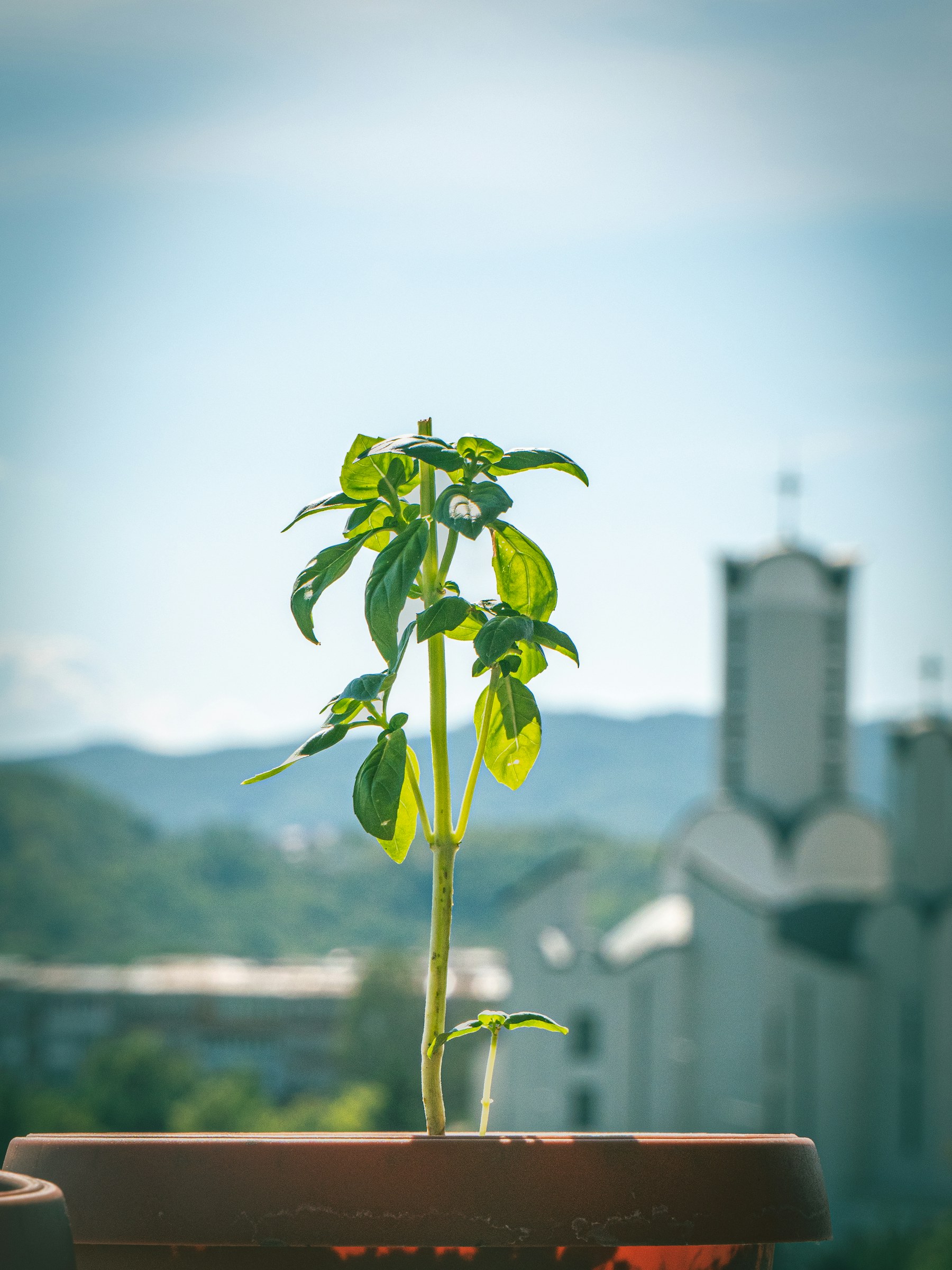
Basil can look thirsty, scorched, waterlogged, or root-bound for different reasons. Change one variable at a time for seven days so the plant—not a shopping list—shows what it needs.
Day 1 — Map direct sun and reflected heat
Record when direct sun begins and ends, then feel the pot wall and nearby surface without touching overheated metal. University of Minnesota Extension describes basil as a warm-season plant needing sun and protection from temperatures below 50°F/10°C; it does not claim every cultivar tolerates a heat-reflecting balcony all afternoon.
If leaves droop only during the hottest period and recover later, observe before adding more water. Move no plant permanently on one reading; trial a little afternoon protection while keeping adequate light.
Day 2 — Check moisture below the surface
Press a finger into the upper soil or use a clean probe, then compare several points. A dry-looking surface can hide moisture below; a wet surface can sit over a dry root ball if water runs down the pot edge.
Water thoroughly only when the plant and soil indicate it, let excess drain, and never leave the pot standing in runoff. Pots differ in size, material, mix, wind, and root density, so a universal daily schedule is unreliable.
Days 3–4 — Inspect drainage and roots
Confirm open drainage holes and look for water escaping evenly. Persistent sour smell, algae, yellow lower leaves, or soil that stays saturated deserves attention. Do not add fertilizer to a plant whose roots may be short of air.
If roots circle densely at the holes and water crosses the pot instantly, the plant may need a slightly larger container and fresh, well-drained potting mix. Avoid an oversized jump that keeps a large wet volume around a small root system.
Days 5–7 — Harvest, compare, and decide
Pinch cleanly above a leaf pair to encourage branching and remove flower heads if leaf harvest is the goal. Extension guidance notes that regular harvest helps maintain production. Do not remove most foliage from a stressed small plant.
At day seven compare notes and photographs. Change the strongest limiting factor—light timing, watering method, drainage, or container—then observe again. Diagnose pests or persistent decline with a local horticultural professional; this trial is not a plant-disease diagnosis.
Source and limits
University of Minnesota Extension was checked 4 September 2026. Its climate guidance is authoritative for its region; adapting the observation method to hot balconies is our cautious editorial inference. Local cultivar, season, humidity, salinity, and building conditions take priority.