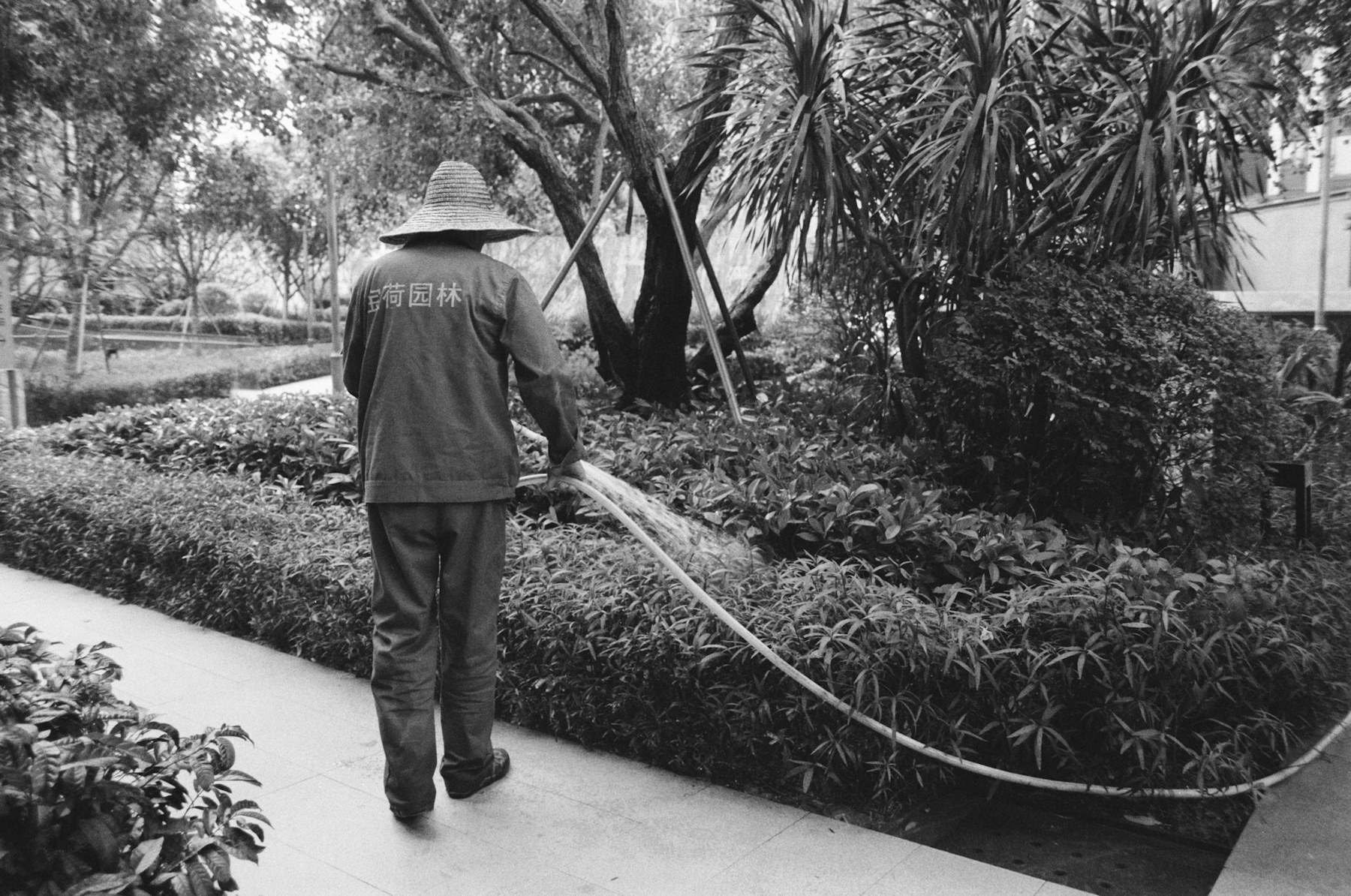
Smart watering does not begin with an app. It begins with the plant, soil, sun, and root zone. Good technology can cancel an unnecessary cycle; it cannot rescue the wrong tree in the wrong place or a blocked emitter.
1. Map heat before mapping pipe
Observe the garden across several days. Mark hard afternoon sun, reflected heat from walls or glass, persistent shade, wind, and containers that heat faster than open ground. A raised bed beside a west wall loses water differently from an established tree in deep soil.
Create irrigation zones with similar needs: trees, adapted shrubs, seasonal flowers, containers, and lawn if present. A controller can only make decisions within the zoning you give it, so this design work matters more than the app’s feature list.
- Direct-sun hours
- Reflected heat
- Container or soil depth
- Plants with similar water needs
2. Choose for the exact place, not the phrase “heat tolerant”
Saudi Arabia’s Ministry of Environment, Water and Agriculture publishes native plants suited to gardens and urban spaces, with notes on region, heat, drought, and salinity. Examples include tamarisk, Salvadora persica, Moringa peregrina, and several irises—but a national list is not a promise that every plant suits every city or courtyard.
Check the scientific name, mature size, toxicity, and regional conditions. A locally adapted plant can need less supplemental irrigation after establishment when it is placed well. It is not a promise of zero water or zero maintenance.
Some listed plants are toxic, threatened, or unsuitable for casual propagation. Buy from a responsible nursery and do not collect wild plants.
3. Test the root zone before adding minutes
Run one zone briefly, then inspect several points at an appropriate root depth. A damp surface does not prove deep wetting, while ponding can mean compaction or an application rate faster than the soil can absorb.
Well-designed drip irrigation can reduce exposed wet surface, but emitters still need flushing, leak checks, and placement that follows expanding roots. Use suitable mulch without piling it against stems, and investigate drainage or salinity when crusting and persistent decline appear.
- Check more than one point
- Look for blockage and leaks
- Expand wetting as roots grow
- Keep mulch off the stem
4. Match the controller to the question
Weather-based controllers adjust schedules using local weather and landscape inputs. Soil-moisture-based control measures water in the ground and can bypass irrigation at a chosen threshold. EPA WaterSense treats these as two distinct approaches and independently certifies qualifying products.
Weather-based control suits a well-zoned garden that needs seasonal adjustment. Soil sensing suits a representative root zone where direct moisture is the useful signal. One sensor in a shaded pot should not control a tree in full sun. Confirm valve, controller, network, and regional service compatibility before buying.
WaterSense savings figures describe particular US household assumptions. They are useful evidence of function, not a guaranteed saving for a Saudi home.
5. Pilot one zone and keep a two-week record
Start with one zone. Photograph wetting, note cycle length and weekly weather, and change one variable at a time. The goal is not a permanently damp surface; it is appropriate water at the root zone followed by aeration suited to the plant and soil.
After two weeks, inspect leaves, new growth, soil, emitters, and water use if your bill or meter makes that visible. If the system produces alerts without changing a decision, simplify it. A smart garden is one you can understand and maintain.
- One zone first
- One change at a time
- Manual check against app data
- A recurring emitter and filter check
Affiliate links · Amazon.sa
Optional tools for a small trial. Use what you already own and confirm compatibility before buying.
As an Amazon Associate I earn from qualifying purchases. We show no unverified retailer prices or copied product images, and commission does not determine editorial selection. Disclosure.
Sources and limits
Official sources were checked on 30 July 2026. Water needs vary by plant, soil, weather, and system design. Use a qualified horticultural or irrigation professional for large installations or persistent plant decline.
- Saudi Ministry of Environment, Water and Agriculture: native plants suitable for gardens and urban spaces
- US EPA WaterSense: weather-based irrigation controllers
- US EPA WaterSense: soil-moisture-based irrigation controllers
- FAO: introduction to crop evapotranspiration
- Saudi Green Initiative: greening Saudi Arabia