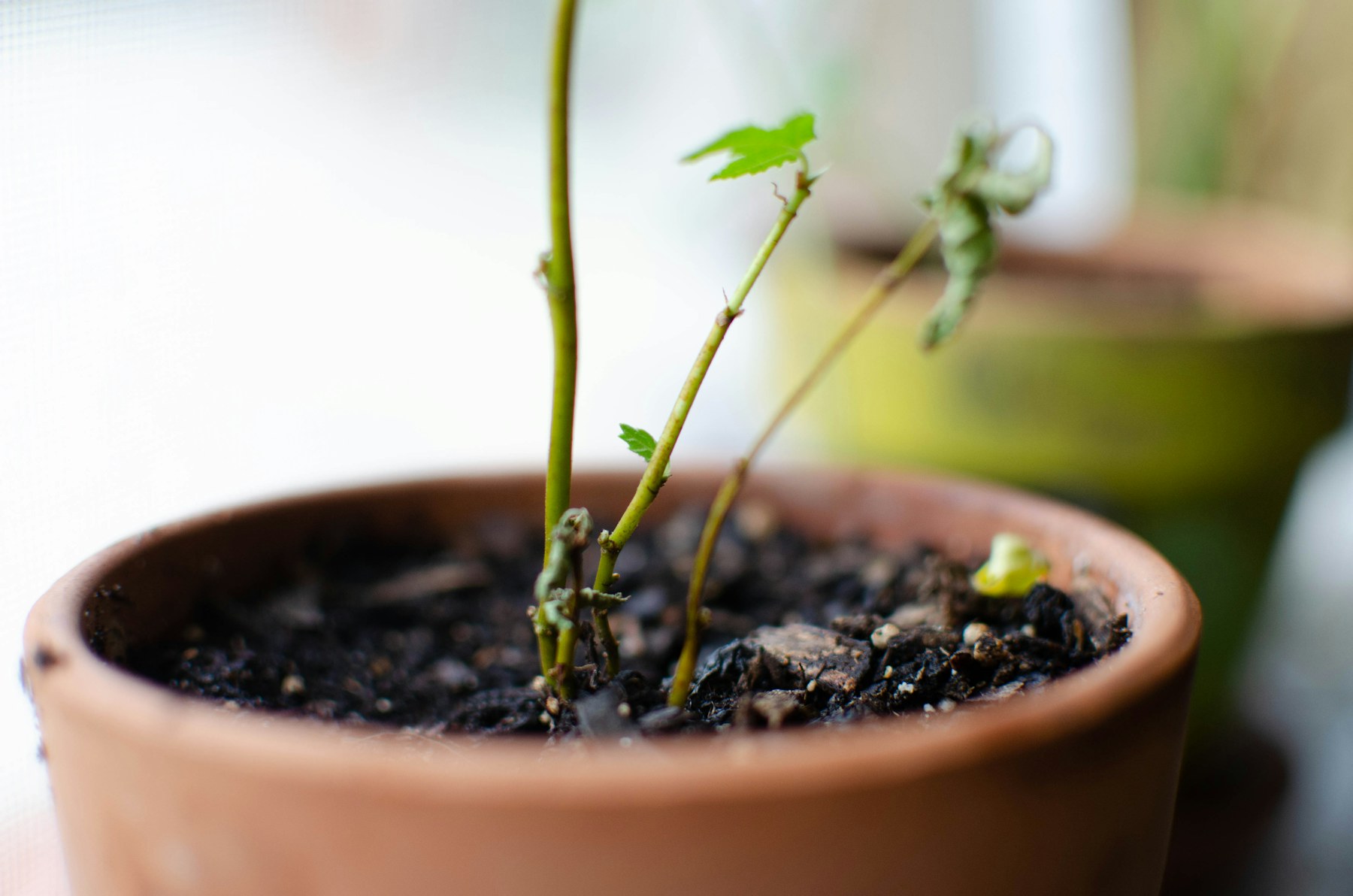
A wilted container plant does not automatically mean bad soil or a need for more water. Record four comparable signals, then change one variable. The useful outcome is a defensible decision: adjust watering, clear drainage, refresh the surface, or repot when the evidence supports it.
1. Day 1: fix the baseline
Photograph the plant, container, and mix surface. Note pot size and material, direct-sun hours, reflected heat, and wind. Small, dark pots in full sun can heat and dry quickly, but appearance alone does not reveal the root-zone condition.
Confirm that drainage openings are clear and that an inner pot can drain above any cachepot water. Do not automatically add gravel to the base, and do not fertilize a declining plant before understanding moisture and drainage.
2. Days 2–4: watch water enter and leave
When the plant actually needs water, wet the mix thoroughly and let excess drain. Record when drainage starts and whether water races down the wall while the centre stays dry. UC ANR notes that container media can become water-repellent after drying completely in hot, dry weather.
Compare two or three points at a root-relevant depth rather than judging the crust. A dry core after fast runoff suggests channels or a shrunken mix. Long saturation and an unusual smell call for a drainage and aeration check—not another watering.
3. Days 5–7: separate salts from soil colour
Look for white crystalline crust on the medium, rim, or drainage opening. Record water source, fertilizer, and dose. Extension guidance notes that salts accumulate readily in the limited volume of a pot and that over-fertilizing can intensify the problem.
Do not diagnose salinity from yellow leaves alone. Where the container can drain safely, a thorough watering with suitable water and complete drainage may help leach residues. Persistently saline water, sensitive plants, or continuing decline need local testing and advice.
4. Days 8–10: look for real root-crowding evidence
Dense roots through drainage holes, a circling root mass, or water passing instantly alongside stalled growth can indicate that space or media has become limiting. Do not pull a flowering or heat-stressed plant apart merely to satisfy curiosity.
When crowding is clear, move up gradually and use a container mix designed to balance water and air. Heavy garden soil can compact in pots and restrict the movement roots need.
5. Days 11–14: choose the smallest sufficient intervention
If drainage is sound and the plant is stable but the surface has settled, a suitable top refresh may be enough. If the mix shrinks or resists wetting, rehydrate it gradually according to its label or repot during milder conditions. If roots clearly fill the pot, repot rather than repeating short drinks.
After one change, keep location and the rest of the routine stable for several days. This audit cannot promise a rescue: pests, root disease, persistent salinity, or rapid decline deserve local professional diagnosis.
Day-14 decision
- Water enters the mix evenly
- Excess drains and does not pool below
- No growing salt crust
- Roots are not a choking solid mass
- One change can be measured
Sources and limits
University Extension sources were checked 16 October 2026. Applying them to Gulf balconies is a cautious editorial inference; plant species, water quality, humidity, season, and the local mix take priority.